Crossing borders
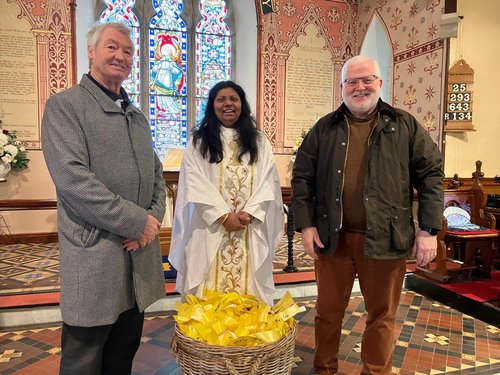
Shirley Murphy is enjoying her ministry in Ireland
I moved to the Church of Ireland (COI) in August 2025 from the Church in Wales (CinW) and became the Rector for the Dundalk Group of Parishes in the Diocese of Armagh. I have five churches, four of which are in the Republic of Ireland (ROI) and one is in Northern Ireland (NI).
While the CinW and COI are both self-governing provinces within the Anglican Communion, the primary difference lies in their history and structure: the CinW (disestablished 1920) operates six dioceses, while the COI (disestablished 1871) covers the entire island of Ireland (both NI and the ROI). The COI is led by the Archbishop of Armagh (Primate of All Ireland) and the Archbishop of Dublin (Primate of Ireland).
The Church of Ireland Book of Common Prayer is used in all our services, which range from Anglo-Catholic (high church) rituals to more modern, reformed styles. We are considered more Protestant than Anglican and provide a space where people with diverse views on theology and liturgy can worship together. Furthermore, whereas the CinW increasingly emphasizes the equal status of Welsh and English in worship, services in the COI are overwhelmingly in English. We pray for the Monarchy in our churches in NI whereas in the ROI we pray for the President.
The COI describes us as a community of disciples, encouraging parishes to develop their own mission strategies; each parish and diocese takes part in this shared task. Local Christians have local knowledge and can therefore work out what is best suited to their situation.
As churches, we celebrate the progress on unity made by ecumenism and we work well with the local Catholic churches, often holding joint events.
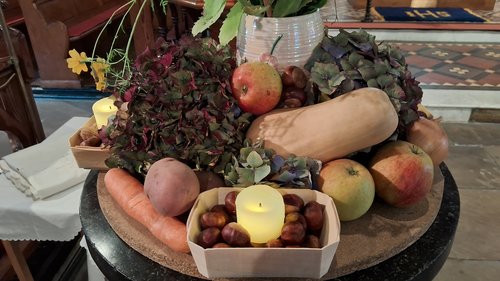
My favourite times have been the harvest and Christmas services. Harvest services in each church are different, and bring Protestants and Catholics together - the buffets after the services can feed an army. Christmas carol services also vary. The St Nicholas Church (called Green Church because of its green spire) has Carols by Candlelight, which attracts more than 700 people.
We have a Yellow Ribbon Service in January when we bless the yellow ribbons which bedeck the town of Dundalk in memory of loved ones.
I’ve been Rector of this group for 9 months, and it’s been a blessing in so many ways. That feeling of coming home has deepened with every service as I get to know my fellow parishioners and contribute to the life of the Church.