 Safeguarding
 Find a church
 Find clergy

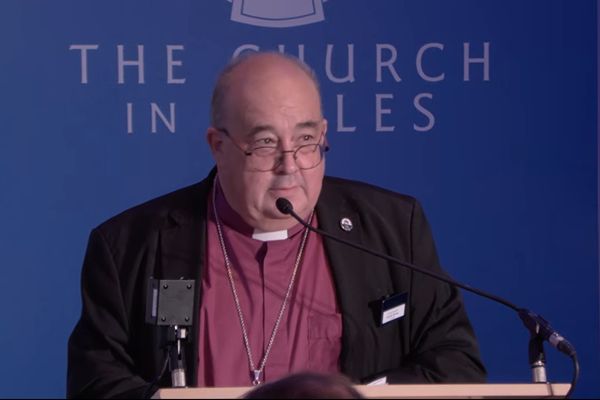
The Bishop of St Davids has warned that decisions over the future of Church in Wales schools in Pembrokeshire could have consequences far beyond the county, with other local authorities watching closely.
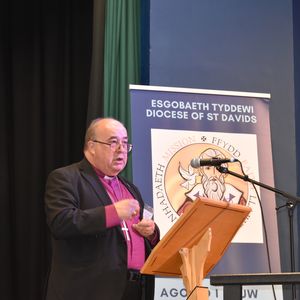
Speaking at the Church in Wales’ Governing Body, the Rt Revd Dorrien Davies highlighted recent challenges involving Manorbier School, Ysgol Cilgerran and Tenby VC School, warning that the future of Church school provision “cannot be taken for granted”.
Across Wales, the Church in Wales has a network of 141 schools educating approximately 27,000 learners. Around 22 per cent are Welsh-medium or bilingual, making an important contribution not only to education but to the Welsh language, Welsh culture and the sustainability of rural communities.
Addressing the Governing Body, Bishop Dorrien said:
“Recent challenges to the continuation of Church in Wales school provision, such as those involving Manorbier School, Ysgol Cilgerran and Tenby VC School in my own diocese, remind us that the future of Church schools cannot be taken for granted.
“We must remain vigilant and proactive in advocating for the value that Church schools bring to learners, families and communities.”
Departing from his prepared address, the Bishop went further, stressing his concern about the wider implications of decisions currently being taken in Pembrokeshire.
He said:
“I feel very strongly that the eyes of local authorities are upon us, and if we lose our grasp on our Church schools, we lose our grasp on the influence which our Archbishop so wisely pointed us towards today.
“It is important that the Christian faith burns within our schools and amongst those in our care.
“The eyes of local authorities are looking upon Pembrokeshire County Council. If we fail in keeping Church schools open, others will try to succeed in shutting Church schools.”
The Bishop’s intervention came as he outlined the significant contribution Church schools make throughout Wales, with high-quality education, which is consistently inclusive, and forward looking. However, he did note the growing pressures facing them.
He told members that Church schools are dealing with financial pressures and rising costs alongside difficulties recruiting and retaining headteachers and foundation governors. Schools are also responding to increasingly complex learner needs, including Additional Learning Needs, poverty-related challenges and concerns around wellbeing.
He highlighted particular concerns over the long-term sustainability of smaller and rural schools, many of which lie at the heart of the communities they serve.
Bishop Dorrien said the Church in Wales must continue to have a strong voice in discussions over educational policy and reform and must actively advocate for the preservation of Church school provision where it is placed at risk.
He added:
“Church in Wales schools are rooted in Christian values and committed to inclusion, wellbeing and excellence. They make an extraordinary and distinctive contribution to education in Wales.
“Education is about more than attainment alone. It is about enabling every child and young person to flourish intellectually, emotionally, spiritually and socially. It is about nurturing hope, purpose and belonging.
“We have a responsibility to protect and sustain this ministry for future generations.”
The Diocese of St Davids continues to advocate for the importance of Church in Wales education by working in partnership, and the contribution its schools make to children, families and communities across west Wales.