Tragedy at sea
Alun Ifans recounts a tale of doom off the coast of west Wales that had a lasting impact on maritime history.
There was a great deal of activity in Solva in 1775, when loads of iron bars were transported from the harbour out to sea to erect the first lighthouse on the rocks of the Smalls. The Smalls are a cluster of dangerous rocks some twenty-two miles from the coast. It was the site of many shipwrecks and hundreds of sailors were drowned there.
In the eighteenth century a Liverpool violin maker, named Henry Whiteside, heard of all the lives that had been lost on the rocks. Henry had married the daughter of an innkeeper from Solva and settled there, turning his sights to lighthouses. He formed a partnership with John Phillips, who obtained a 50-year lease from the crown to erect the lighthouse on the Smalls.
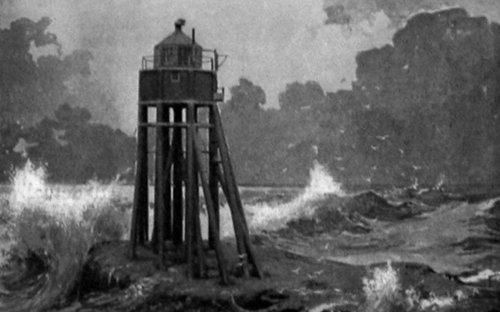
The lighthouse frame was built of iron bars bolted together but this proved unsuccessful and robust oak posts had to be used. Ships bound for Liverpool from America, Ireland or the Continent had to pass the Smalls. After the lighthouse was built, all ships had to pay a farthing per ton after docking at Liverpool.
Four local men were employed to light the flames of the lighthouse - two men would work for a month on the lighthouse, and then the other two would take their turn. In August 1801, Joseph Harry and Thomas Griffiths were at the lighthouse together – but they didn't get on well. They were around 30 years old but vastly different; Joseph Harry was small and frail, while Thomas Griffiths was a stocky unemployed cooper. The men waited at the lighthouse for the boat to bring the other two to replace them. But very often it would be too stormy to venture out, and so the men had to wait for more favourable conditions.
While waiting for the boat, Joseph Harry's health deteriorated and he died. Thomas Griffiths didn’t dare to dump the body into the sea, for fear of being charged with murder. He stayed with the body as he waited for the boat but in vain, due to the bad weather. The weeks dragged on and there was no prospect of the storm subsiding or a boat venturing out.
Thomas Griffiths made some sort of a coffin for the body, and to avoid the overwhelming stench, he tied the coffin to the light outside on the small balcony around the lantern glass. But he was still not free from the clutches of his fellow keeper and the coffin began to dismantle against the glass. By the time he was rescued, Thomas Griffiths had become mad and, since then, three keepers have always been stationed at every lighthouse in the country.