Boys behind bars
Theresa Haine’s latest despatch from Madagascar describes how worms have helped rehabilitate young prisoners.
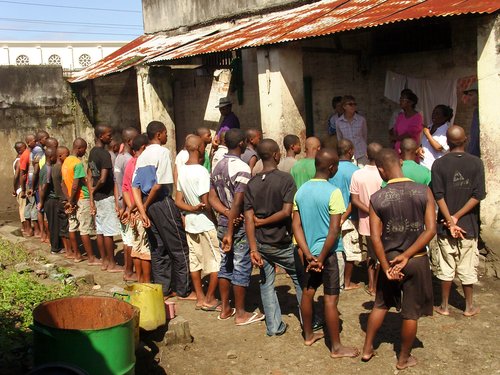
Prisons in Madagascar are horrible places and Charnette, our partner in the port city of Toamasina, was very concerned at the situation of prisoners there. There is no system of law-breakers being given the chance of remand while they wait for their case to be heard in court. Even quite young boys are sent straight to prison and may stay there for a very long time awaiting trial.
The conditions are bad with prisoners having to sleep on what I can only describe as concrete shelves and having poor and inadequate food. Charnette discovered that the prison owned a large area of land outside the city and persuaded the governor to allow the prisoners to cultivate it, helped by agricultural engineers employed by the Development Department of the United Protestant Church (SAF) and the project staff.
Given their weakness due to insufficient food, the prisoners did an amazing job and created rice fields where enough rice could be grown to give each prisoner one rice meal a day. The men also dug fishponds and vegetable plots so that they could have vitamins and protein in their diet.
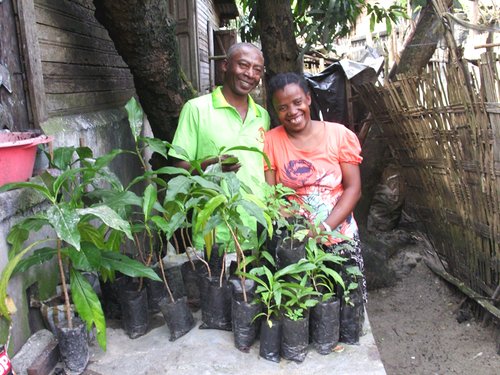
The boys were taught to grow vegetables in the small plot of land around their dormitory and to make worm compost in plastic containers collected from the town tip. Sadly, rats ate all the worms in the boys’ first attempt at compost so they built a storage cupboard protected by wire mesh and had no problems after that.
On release the boys were allowed to take their pots of compost home with them and teach their parents how to make it. This gave the families a good way to grow vegetables or flowers for sale and to increase their family income.
When we first visited the boys a life prisoner was in charge of them. Charnette managed to change that and a kindly prison guard took over. A baseball court was created for them which proved very popular and literacy classes were started.
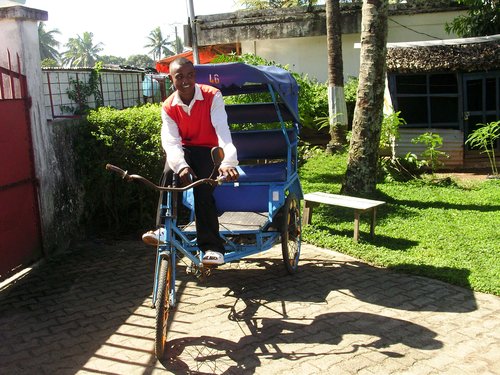
The SAF team help the older boys after their release to find work in such things as car-washing. One hired a cycle-rickshaw and did so well that he was finally able to buy the rickshaw.
Money for Madagascar funded this SAF work in the prison and we are very happy that we could do so.