A Middle East celebration
John Holdsworth reports on a notable anniversary
People are sometimes surprised to discover that there is a Province of the Anglican Church that covers the Middle East and North Africa, an area associated with, and in a religious sense dominated by, Islam. The good news is that there is indeed an extremely vigorous Anglican presence in the area, and this month it celebrates 50 years as a separate province. There has been an Anglican presence in the area for far longer than 50 years, but the Jubilee marks the establishment of the area as a Province in its own right,
It is a mark of its success that the North African part of the Province, that used to be the Diocese of Egypt, has now become a Province in its own right – the Province of Alexandria – with four dioceses and churches in Ethiopia, Egypt, Libya, Algeria, Tunisia and Chad (where it is growing exponentially with more than 30 new churches opening in the last year). The Diocese of Gambella, part of Ethiopia, has more than 150 churches, many in refugee camps where they are making a valuable contribution to tribal harmony.
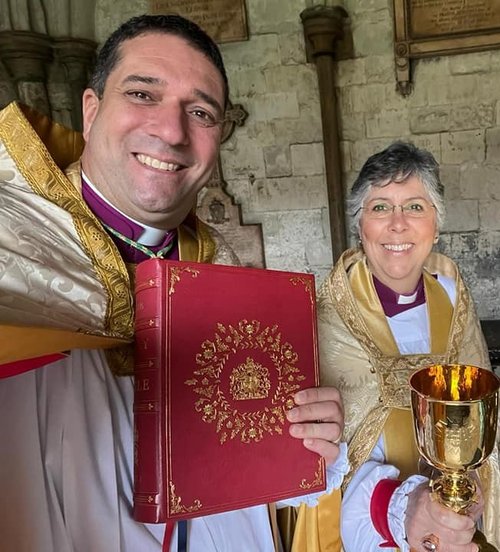
Services have been held in Jerusalem, London and Bahrain to mark this Jubilee. The Dioceses of Iran, and Cyprus and the Gulf, were also part of the 1976 arrangement. The Diocese of Jerusalem has churches in Israel/Palestine, Jordan, Lebanon and Syria. In Israel and the West Bank it has a valuable witness of presence, which is under threat to some extent by the emigration of Palestinian Christians, for whom life under occupation is extremely difficult, and who are actively intimidated into leaving.
They have been unable to exercise their traditional ministry of welcome to pilgrims during the past few years but are now desperate to see visitors return. The Jerusalem and Middle East Church Association (JMECA), which supports ministry in the Anglican churches, holds one fund which is specifically for Church in Wales ordinands and ministers to study in St George’s College in Jerusalem and would welcome applicants. Bishop Wyn was a beneficiary of this fund when he was an ordinand.
The JMECA website (jmeca.org.uk) contains many inspiring stories of the work done by the churches in the area through hospitals, schools, community projects and with the many refugees from the war in Sudan. It also contains official statements by the Leaders and Patriarchs of the Churches in Jerusalem, the latest of which is highly critical of the influence of Christian Zionism.
Picture: Hosam Naoum, current Archbishop of Jerusalem and the Middle East, and the Bishop of Chelmsford, Guli Francis-Dehqani, whose father was the first