Moths? In winter? Really?
Apparently so, according to Harriet Carty from Caring for God’s Acre
It seems a strange time of year to be looking for moths but there are a couple of tough cookies who brave the winter weather!
The December Moth (pictured left) and the Winter Moth have different ways to cope. The December Moth wraps up warm; it has a coat of hairlike scales, giving a fluffy appearance, which helps it hold heat well enough to be active and to fly. The Winter Moth by contrast can fly when at a lower body temperature. It has large delicate wings and a small body, its big wings able to beat less frequently to stay airborne.
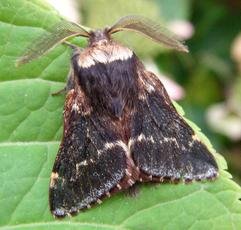
![Winter Moth [Male]](https://stdavids.contentfiles.net/media/images/Winter_Moth_Male_.width-500.jpg)
Neither moth will feed when on the wing; they rely on food reserves built up as a caterpillar. The adult stage is devoted solely to searching for a mate and, in the case of the females, laying eggs. December Moth males and females both fly, with the female larger in size than the male, whilst Winter Moth females are flightless. They emerge from a chrysalis in the soil and crawl up a nearby tree.
Once there they emit pheromones to attract males then wait for them to arrive. Both moth species lay their eggs on the winter twigs of broadleaved trees including oaks, birches, hawthorns and willows. The eggs hatch when the trees are coming into leaf, giving the caterpillars lots of young, soft leaves to eat.
Most people are more familiar with the caterpillars of both December and Winter moths than with the adult. December Moth caterpillars are mottled brown, well camouflaged when on twigs and bark whilst Winter Moth caterpillars are bright green, the colour of new leaves. You may have seen the holes in leaves caused by their voracious appetites or spotted a caterpillar dangling from the mouth of a parent bird, being taken to feed chicks in the nest. Whilst the adult moths may emerge at a time of year when there are few predators about, with bats in winter roosts, the caterpillars are an important early source of protein in the spring, particularly for breeding birds.
Moths are drawn to lights which may kill them or distract them from seeking mates and laying eggs. Please think about outdoor lighting, keeping it to the minimum need to give safe access. But they might just help you look for moths when out and about during the long winter nights.